
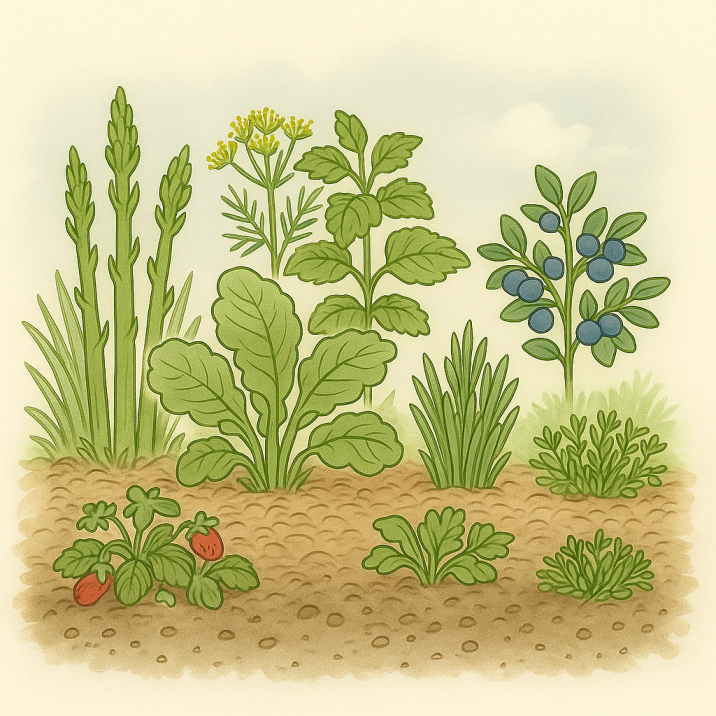
Perennials are the backbone of a self-sufficient garden. Unlike annuals, you plant them once and harvest for years. For homesteaders, they’re time-saving, soil-protecting, and food-producing machines.
Why Perennials?
- Low Maintenance: No replanting each year.
- Soil Friendly: Roots stay in place, reducing erosion and improving structure.
- Resilient: Many tolerate drought, pests, and poor soil better than annuals.
- Early Yielders: Perennials often produce earlier in the season than annuals.
Top Edible Perennials to Grow
| Type | Plant | Notes |
|---|---|---|
| Vegetables | Asparagus | Needs a dedicated bed, thrives for 20+ years |
| Vegetables | Rhubarb | Cold hardy, great in pies and preserves |
| Greens | Sorrel, Good King Henry, Perennial kale | Great salad and soup greens |
| Fruits | Strawberries, raspberries, blueberries | Choose based on climate zone |
| Herbs | Chives, oregano, thyme, mint | Come back strong each year |
Designing Your Perennial Garden
- Start Small: Focus on a few productive staples first.
- Group by Water Needs: Put drought-lovers together, moisture-lovers elsewhere.
- Use Layers: Combine tall, medium, and ground-cover plants to mimic nature’s design.
- Mulch Everything: Retains moisture and keeps weeds in check.
- Plant Once, Improve Forever: Amend soil well during planting and let the plants do the rest.
Maintenance Tips
- Divide plants every few years to keep them vigorous.
- Add compost once or twice a season around the root zone.
- Watch for runners (especially strawberries and mint) and control spread.
Pro Tip: Combine Perennials and Annuals
You can mix perennials with your annual beds using edge planting or sectioning. This way, you maximize food output and minimize total labor.